Not Good Enough
Some time ago, an office donated boxes of discarded paper to our studio. We expected old documents, scrap paper, and unwanted office supplies.
What surprised me most was not the paper.
It was the paper towels and toilet paper.
There were rolls and rolls of them, perfectly usable, discarded because they were considered poor quality. Not damaged. Not unusable. Simply not good enough.
The experience stayed with me.
Every morning, we brush our teeth with water safe enough to drink. Each time we flush a toilet or empty a bathtub, clean drinking water disappears down the drain. These are ordinary moments we rarely notice, yet much of the world—and much of human history—would consider them extraordinary luxuries.
We live surrounded by abundance, but often experience it as insufficiency.
The discarded paper towels became a question rather than a material.
What is enough?
When did useful stop being enough?
Today, many of us search for answers through minimalism. We empty closets, donate belongings, and simplify our homes. Yet sometimes minimalism becomes another cycle of consumption. We throw away what is still useful only to purchase newer, better, or more beautiful versions later.
Being a minimalist is not the answer.
The more important question is how much we truly need.
Enough water.
Enough food.
Enough shelter.
Enough comfort.
Enough to create, learn, love, and live.
The therapy begins with collecting.
Not collecting for the sake of owning more, but collecting through observation.
The Practice of Noticing
It starts when we slow down and truly look around. Not just seeing with our eyes, but becoming aware that we are looking. Becoming present with our surroundings.
As attention deepens, the world begins to change.
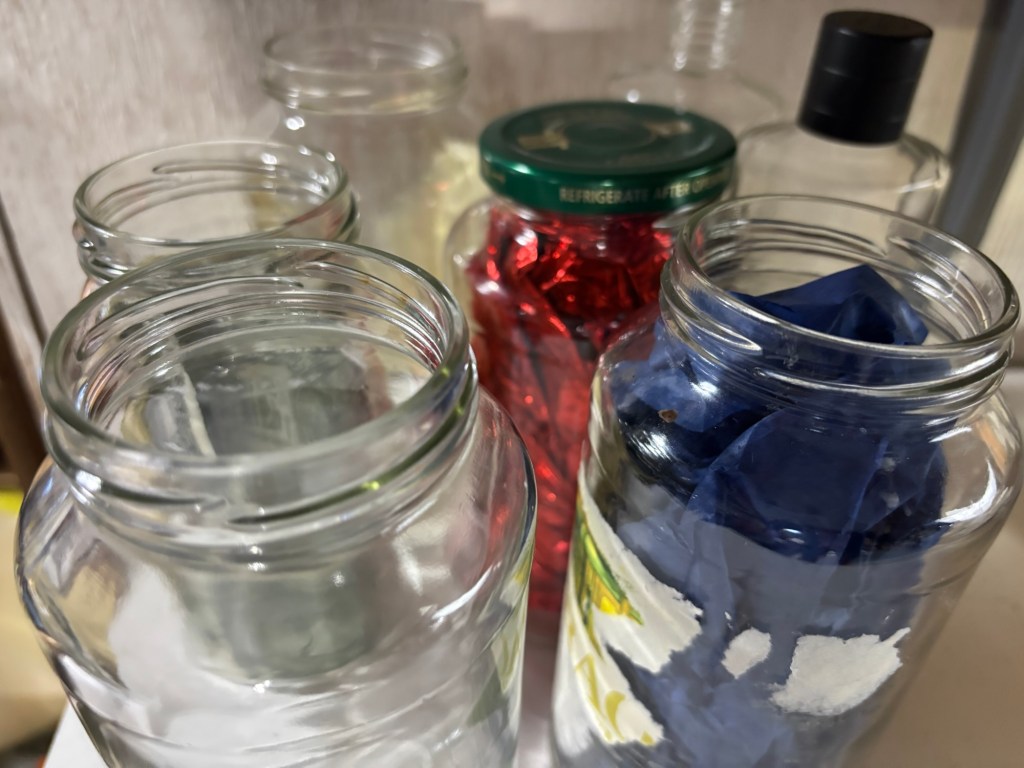
Objects that once blended into the background begin to stand out. A discarded jar catches your eye. A piece of broken wood. A worn piece of fabric. A forgotten container.
And somehow they begin speaking.
“I am the one you need to pick.”
“I am the right fit for your idea.”
“I still have something to become.”
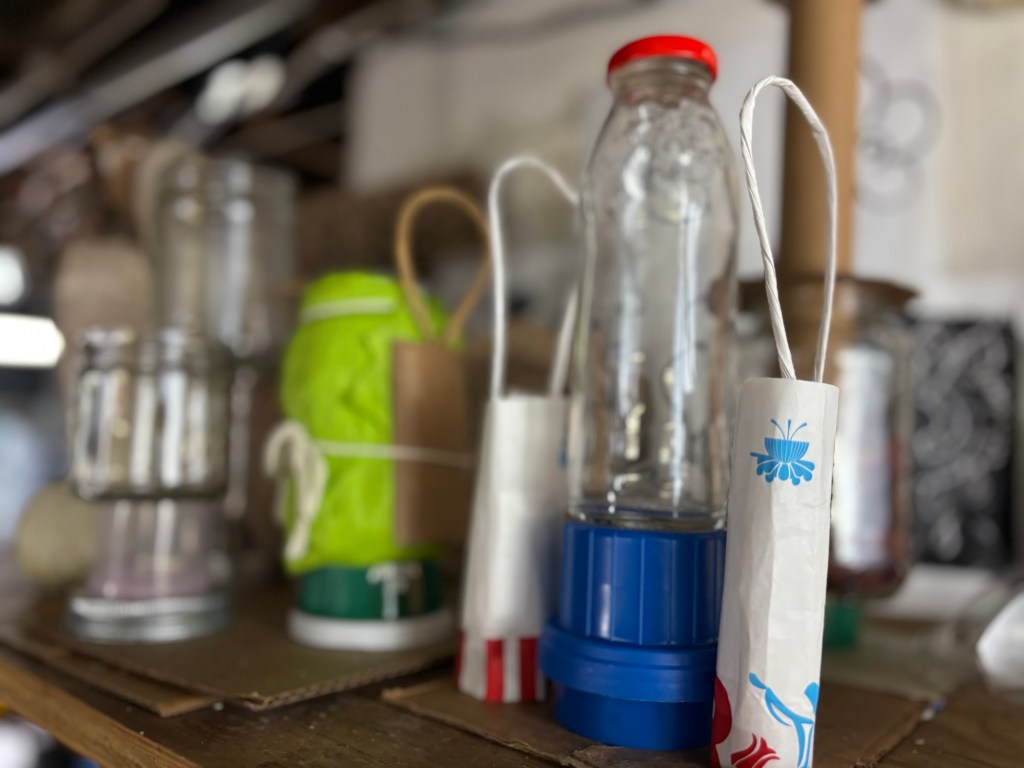
The objects do not need to carry a special memory to deserve attention. They do not need to be a wine bottle saved from a celebration or a treasured family heirloom.
An ordinary tomato jar is enough.
An everyday drinking glass is enough.
A piece of cardboard is enough.
They share the same materials, the same resources, and the same journey through the world. They were formed from the earth, shaped by human hands, transported across distances, and eventually overlooked.
The act of collecting becomes a conversation between imagination and matter.
There is a line where collecting can become hoarding. For me, that line is the act of making.
The collected materials are not the destination. They are the beginning.
The Act of Making
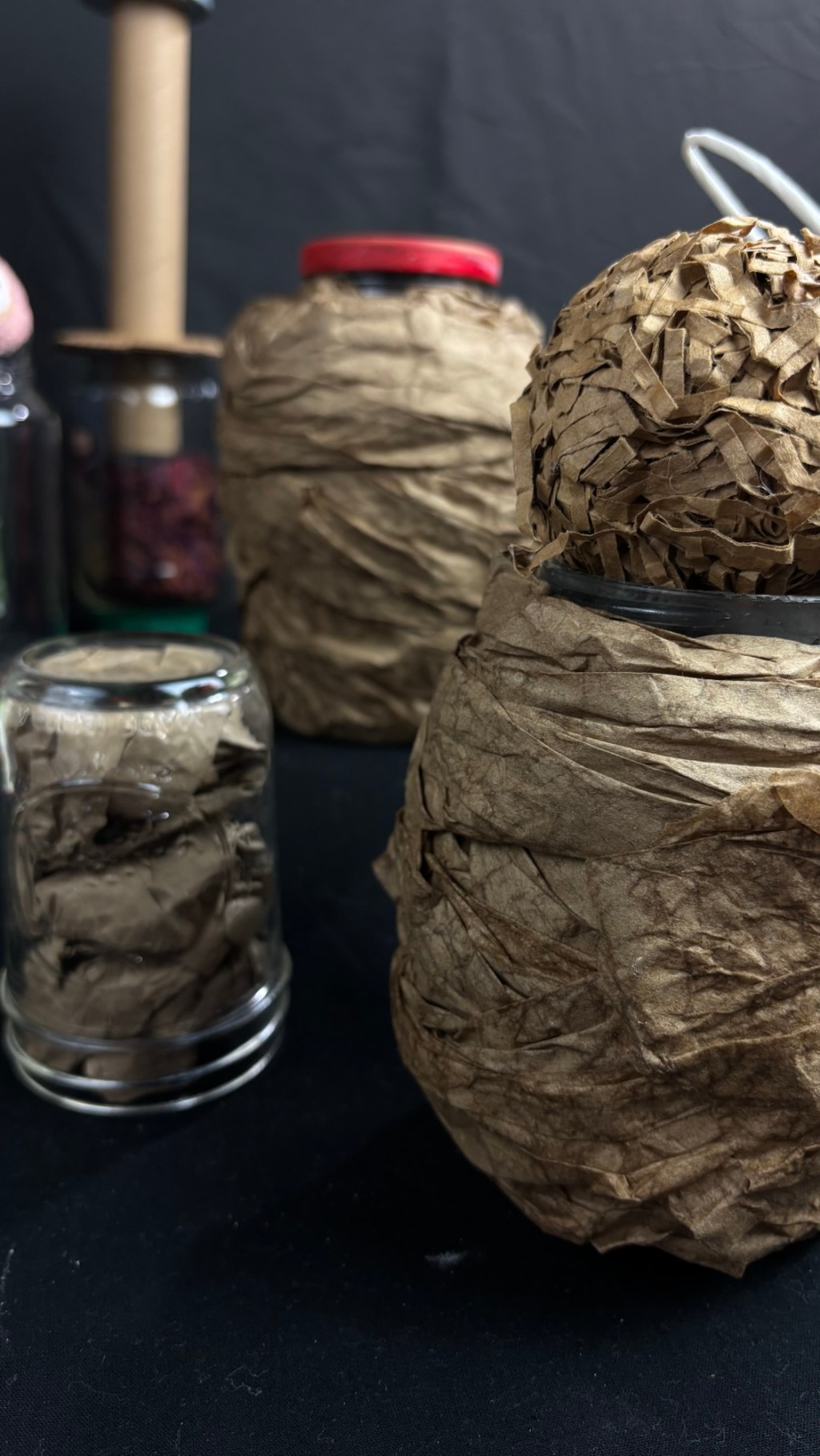
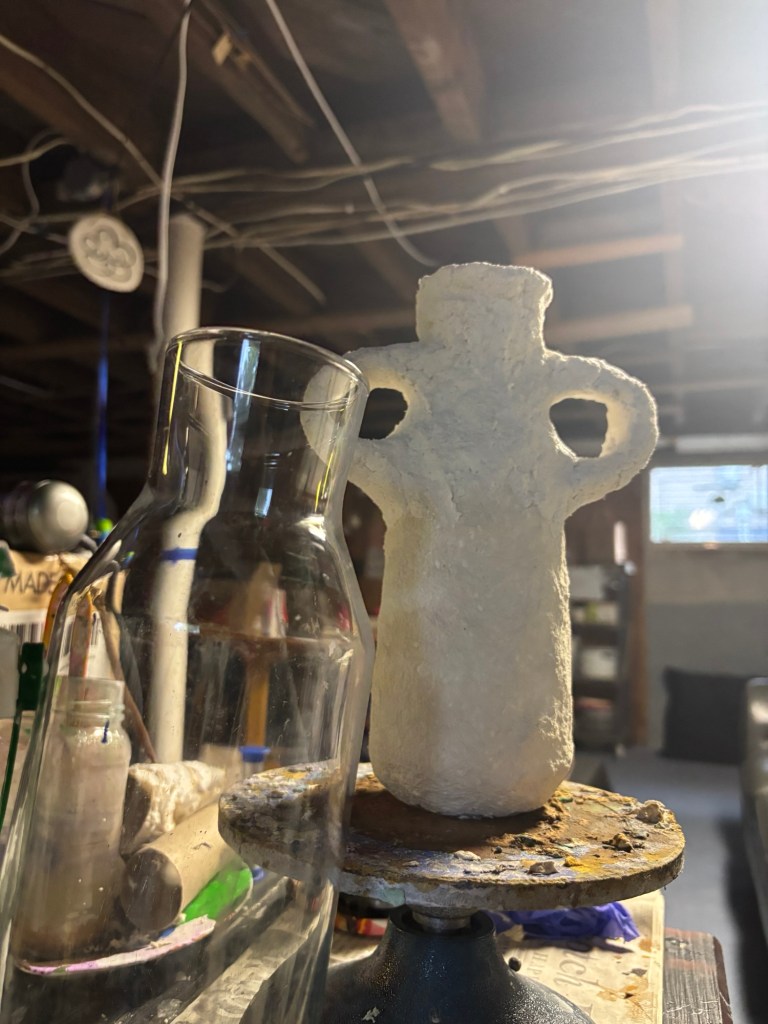
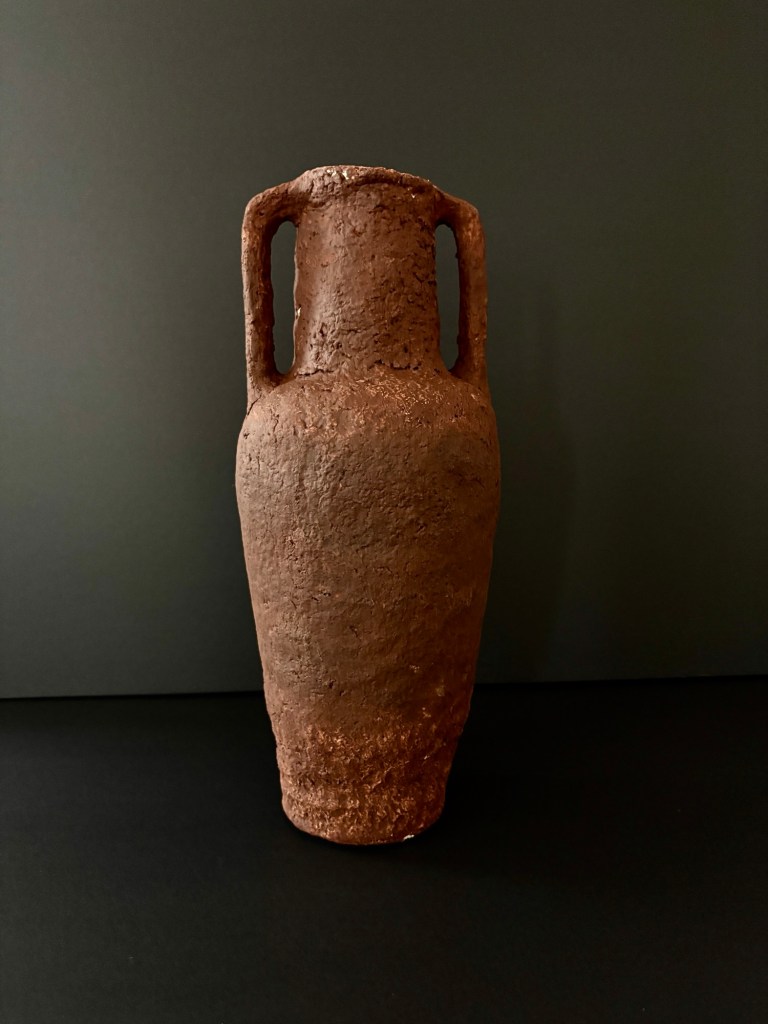
The therapy continues when the materials come together and begin transforming into something new. Layers cover layers. Paper, glass, fragments, and discarded objects gradually lose their separate identities and become part of a single form.
What emerges is not only an object.
It is a record of touch.
The form carries the pressure of fingertips, the movement of palms, the reach of hands. Thickness is measured through touch. Texture is discovered through contact. Dryness, softness, weight, resistance, balance—all become part of a conversation.
The hands become both tools and language.
Long before rulers and machines, people measured the world with their bodies. A finger. A palm. An arm’s length. The body understood form through contact.
Perhaps this is why making feels so grounding.
Collecting teaches us to notice.
Making teaches us to listen.
I see this instinct most clearly in the children I teach.
Whenever we create something in class, children almost always want to add googly eyes. Trees get eyes. Planets get eyes. Cars get eyes. Rocks, boxes, and paper shapes eventually receive a pair of eyes.
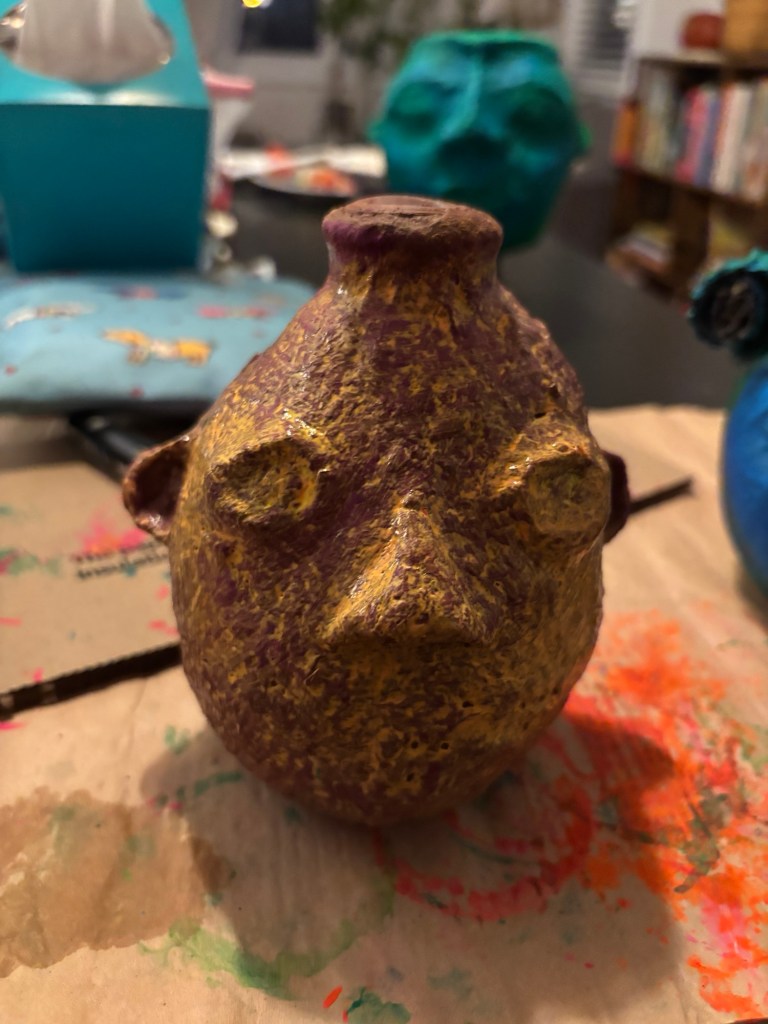
The moment the eyes are attached, the object comes alive for them.
It becomes a character.
A friend.
Something they can communicate with.
Perhaps eyes are important not only because they look, but because they reflect.
When we look into the eyes of another being, we see something of ourselves. Eyes become mirrors.
Maybe this is why I am drawn to drawing eyes on my vessels and sculpting faces into surfaces. The moment the eyes appear, something changes. The object begins to speak. It develops a presence. What was once a surface becomes a companion.
It feels less like decoration and more like giving the object a chance to express itself.
Second Lives
In some feng shui practices, a repaired object is thought to bring positive energy because it has been given a second life instead of being discarded. This idea resonates deeply with my work. Every vessel in the studio begins with materials that someone else considered finished. Through repair, reconstruction, and imagination, they become something new—not by hiding their past, but by carrying it forward.
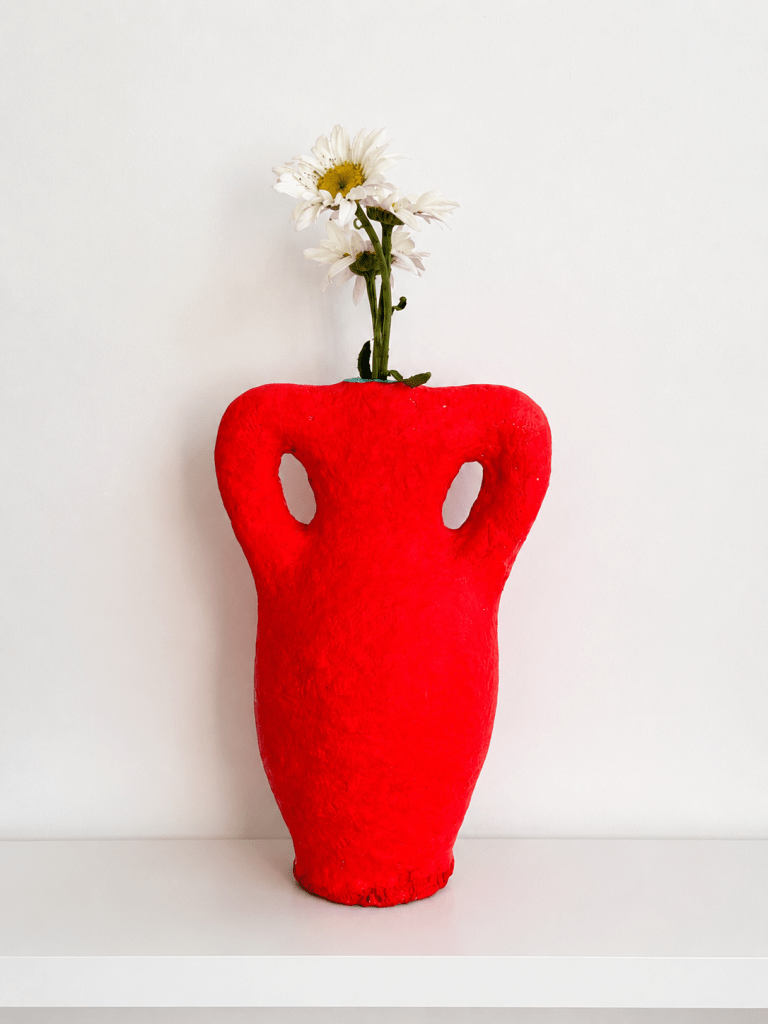
Perhaps what we call waste is often just matter waiting to be seen again.
In a world that constantly encourages us to replace, upgrade, and consume, I find comfort in a different practice.
To notice.
To collect.
To repair.
To transform.
To appreciate.
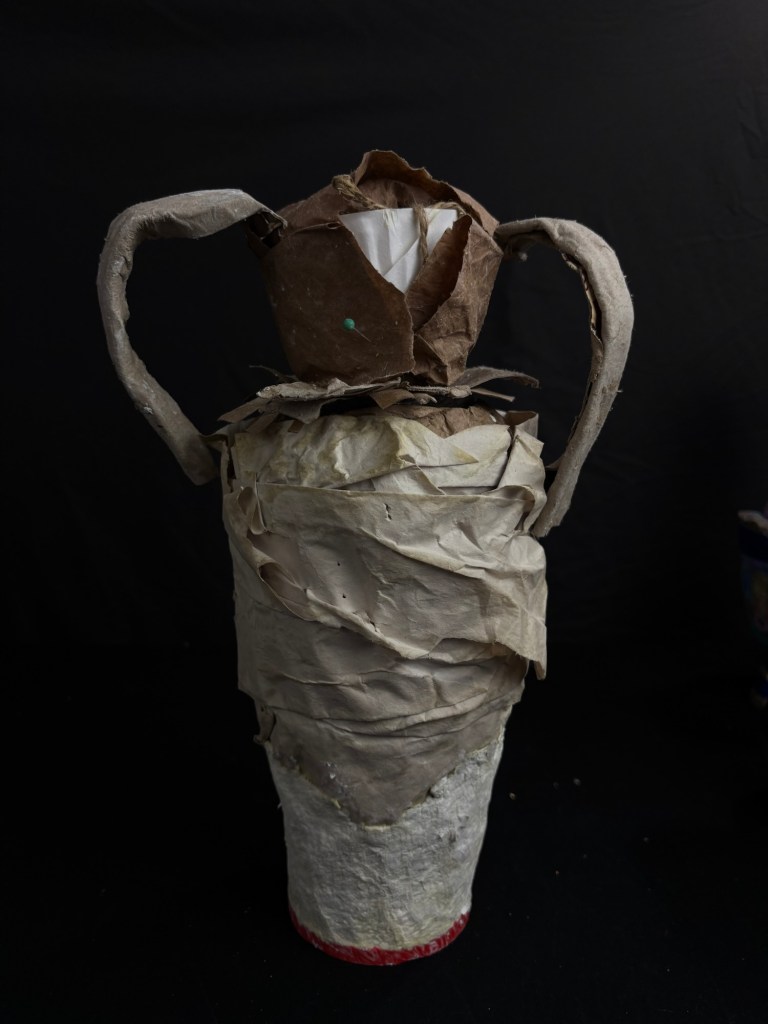
Perhaps abundance is not found in having more things.
Perhaps abundance begins when we recognize that what is already here is enough.


Leave a Reply